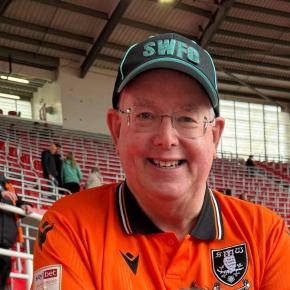
Witness 5 – Full-time Trade Union Official
Organisational Crime Unit
Case File 003
Exhibit B
Witness Interview Summary
Interviewing Officer: Detective Inspector Sarah Whitmore
Interview Status: Completed
Purpose
To establish whether concerns raised through trade union channels support or contradict evidence obtained from senior management, Human Resources and employee witnesses.
Interview Summary
The witness has worked as a full-time trade union official representing employees across the organisation for several years.
Unlike previous witnesses, the interview was not arranged through formal organisational channels. The witness agreed to meet in a neutral location away from the workplace.
The witness arrived without documents but demonstrated detailed knowledge of individual cases, recurring themes and workforce concerns.
The witness described a professional relationship with the Head of Human Resources.
"We don't always agree."
Sarah looked up.
"But?"
"That's healthy. The problem isn't disagreement. The problem is when people stop talking."
The witness explained that both sides preferred resolving issues informally wherever possible.
"We don't get medals for creating grievances. If something can be sorted out through a conversation, that is better for everyone."
The witness confirmed that shop stewards are encouraged to resolve concerns locally before moving to formal procedures.
"Most employees don't want a long process. They want their manager to listen and something to change."
Formal Processes
The witness confirmed involvement in disciplinary hearings, particularly where employees faced allegations of gross misconduct.
However, the witness stressed that most union work involved everyday workplace issues.
"People think unions spend their time fighting management."
"They don't?"
"Most of the time we are trying to stop things becoming a fight."
Sarah asked why formal grievances still occurred.
"Because by the time someone submits a formal grievance, usually something has already broken down."
"What?"
"Trust."
Organisational Patterns
The witness confirmed recurring concerns relating to inconsistent treatment, workload pressures and management decisions.
"Very few people come to us because of one decision."
"What do they come because of?"
"A pattern."
The witness described concerns about annual leave decisions, access to training, secondment opportunities and recruitment processes.
The witness accepted that many complaints were not upheld.
"That doesn't necessarily mean people were wrong to raise them."
Sarah asked why.
"Because people don't only judge fairness by the final decision. They judge fairness by whether the process makes sense."
The witness explained that employees often accepted difficult decisions if they understood how those decisions had been reached.
"The problem is when people think the outcome was decided first and the process came afterwards."
Workload and Vacancies
The witness described ongoing concerns about workload pressures in teams affected by vacant posts.
"Some employees are exhausted."
The witness explained that managers often described these situations as capability or competence issues.
"Sometimes they are right."
Sarah waited.
"Sometimes good people are struggling because there are simply not enough people."
The witness acknowledged that managers were also under pressure.
"Many managers are trying to do their best. The issue is that being good at the technical side of a job doesn't automatically make someone a good people manager."
Relationship with Senior Management
The witness described far less contact with senior managers.
"Usually our conversations happen when relationships have already deteriorated."
"Because that is often when the organisation notices us."
The witness explained that senior leaders sometimes underestimated union influence because membership represented less than half of the workforce.
"That depends where you look."
"In some departments and teams, union membership is much higher."
The witness added:
"More importantly, representation is not the same as influence. People talk to us even when they are not members."
Change and Organisational Decisions
The witness was clear that the union was not opposed to change.
"We are not here to protect every existing arrangement forever."
The witness accepted that artificial intelligence, redeployment, restructuring and redundancies would sometimes be necessary.
"Our role is not to prevent change. Our role is to make sure change is fair."
The witness supported greater use of voluntary redundancy and early retirement options where reductions were unavoidable.
They also expressed concern that redeployment agreements were sometimes undermined by managers.
"Managers can become too focused on job titles."
"What should they consider?"
"Skills. Experience. Potential. And whether people can be supported to move."
The witness argued that training was often considered too late.
The Missing Evidence
Sarah asked whether employee surveys accurately reflected the mood of the organisation.
The witness considered the question carefully.
"They tell you something."
"What don't they tell you?"
"The conversations."
"The conversations between a member and a steward. The conversations between colleagues. The conversations people have when they no longer believe formal channels will help."
"How many of those conversations happen?"
The witness smiled.
"I couldn't tell you."
"A dozen?"
"No."
"Fifty?"
The witness shook their head.
"More."
Sarah made a note.
Unknown quantity of evidence.
The witness explained that many concerns were resolved informally.
"They never become grievances. They never appear in reports. They never appear in survey results."
Sarah asked whether the union had any blind spots.
The witness answered immediately.
"Of course."
Sarah looked surprised.
"Such as?"
"Sometimes we hear from people when something has already gone wrong. We don't always hear from the quiet majority."
The witness paused.
"We have to be careful not to assume every member's experience represents everyone."
Detective's Assessment
Credibility
The witness was balanced and pragmatic. Criticism of management was accompanied by recognition of operational pressures and the challenges faced by managers.
Evidence Awareness
The witness has extensive knowledge of employee concerns, including issues that do not enter formal organisational systems.
Assumptions
The witness believes earlier engagement and greater transparency would improve trust between senior management and employees.
Blind Spots
The witness's evidence is weighted towards employees who seek support. The experience of employees who do not engage with the union remains less visible.
Evidence Supporting the Witness
HR confirms a constructive working relationship with the union.
Recurring themes identified by the witness match concerns raised through grievances, workforce data and employee interviews.
Workload pressures and vacancy issues are supported by organisational records.
Evidence Requiring Verification
The scale of informal concerns resolved outside formal processes is unknown.
Whether earlier union involvement would have changed employee perceptions requires further investigation.
Whether senior management underestimate union influence across different parts of the organisation requires verification.
Next Line of Enquiry
Review informal resolution activity recorded by local union representatives.
Compare departments with different levels of union engagement against survey participation and grievance trends.
Review consultation processes and whether union involvement occurred early enough to influence decisions.
Establish what evidence exists outside formal reporting systems.
Detective's Notebook
The Executive Team sees reports.
HR sees patterns.
The union hears conversations.
Employees remember promises.
Interesting.
The evidence is not missing.
It is unrecorded.
The paperwork tells you what happened.
The people tell you why.
End of Exhibit B – Witness 5